
Digital HR trends are no longer “HR upgrades.” For CFOs, they’re a control-environment decision that impacts audit readiness, employment risk, benefits cost containment, and forecasting accuracy.
Compliance is now central to that decision as enforcement and regulatory complexity rise. In FY 2025, the EEOC reported nearly $660 million recovered for 17,680 victims through administrative enforcement and litigation.
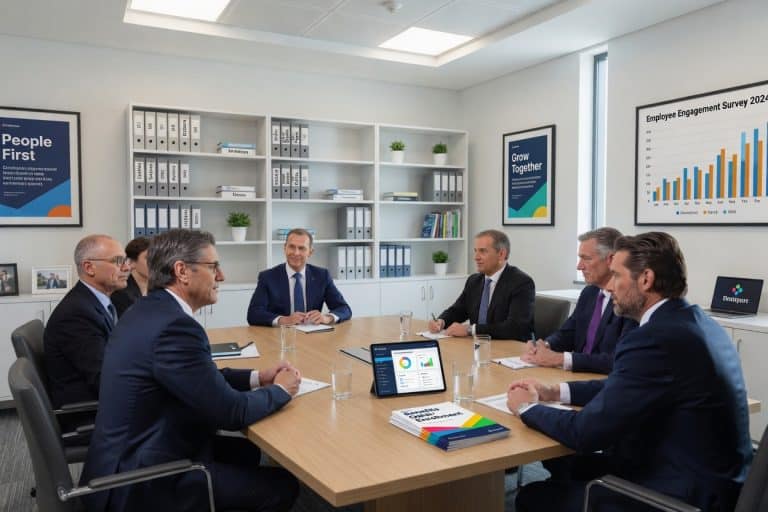
Why Digital HR Trends Matter To CFOs?
Most HR tech conversations still focus on “features.” CFOs should reframe the conversation around three financial questions:
- What risks does this reduce (claims, penalties, litigation, audit findings, data breaches)?
- What costs does this remove (manual processing, vendor sprawl, error rework, turnover)?
- What decisions does this improve (headcount planning, total rewards strategy, labor cost forecasting)?
Here’s the reality: SMB decision makers are already feeling the pressure. In the NAPEO 2024 survey, compliance concerns are widespread, and they’re affecting hiring outcomes.
How ESI helps CFOs here
- CFO-aligned reporting and documentation that supports defensible processes
- Integrated payroll, benefits, and HR administration that reduces “unknowns”
- Structured compliance support so decisions are repeatable—not personality-dependent
Compliance And Enforcement Are Reshaping HR Technology
Digital HR is colliding with a tougher enforcement environment. The EEOC has highlighted record-breaking outcomes and increasing activity in key areas. For example, the EEOC reported $528 million in pre-litigation recovery and cited increases in conciliation and systemic investigation recoveries in its FY 2025 reporting.
From a CFO lens, this changes how you evaluate HR systems and partners:
- Documentation quality matters as much as “doing the right thing.”
- Consistency matters (one-off judgment calls don’t scale).
- Data integrity matters (bad data creates bad decisions and weak defenses).
And it’s not just federal enforcement—multi-state operations amplify the burden. In co-employment focus groups commissioned by NAPEO, business decision makers repeatedly flagged compliance as a “major pain point,” especially across multiple states.
What to measure now
- Time-to-produce compliant documentation (leave, accommodations, discipline)
- Audit trail completeness (who approved what, when, and why)
- Vendor SLA performance for compliance-sensitive workflows (COBRA, notices, eligibility)
How ESI handles the issue
- Provides structured HR guidance and workflows designed for consistency
- Helps centralize payroll, benefits, and HR processes so you can prove what happened
- Reduces “reactive scramble” by creating repeatable compliance routines
AI in HR is Accelerating Value And Accountability Risk
AI is a major driver in digital HR trends, but CFOs should assume one thing: automation shifts accountability—it doesn’t eliminate it.
Leading HR research and industry outlooks point to AI-driven HR transformation as a top priority for 2026.
And SHRM released a 2026 report based on a survey of 1,908 HR professionals (December 2025) to benchmark how AI is actually being used in HR.
CFO risk checks for AI-enabled HR
- Decision explainability: can you explain why the system recommended something?
- Human override: who can veto the automation, and is it logged?
- Bias and adverse impact monitoring: are you auditing outcomes, not just inputs?
- Data minimization: is the system collecting only what it truly needs?
How ESI handles the issue
- Helps clients deploy HR technology with governance guardrails
- Reduces tool sprawl by aligning systems to documented workflows
- Supports a “defensible process” posture—so AI augments, not replaces, accountability
HR Data Security And Privacy Are Now Finance Issues
Digital HR trends are driving more interconnected systems, which expands exposure. In the NAPEO 2024 survey, among employers offering remote or hybrid work, 34% named data security and privacy as a top challenge, alongside productivity tracking and culture.
For CFOs, the key isn’t simply “security tools.” It’s whether your HR ecosystem has:
- One source of truth for employee records
- Clear role-based access controls
- Vendor accountability and breach response playbooks
- Data retention rules that match legal requirements and business need
How ESI handles the issue
- Streamlines HR administration to reduce scattered data sources
- Supports consistent access and process controls through standardized workflows
- Helps reduce the operational friction that drives risky workarounds
Workforce Analytics Are Replacing HR Opinions With CFO Grade Reporting
Digital HR trends are pushing HR toward measurable outcomes—especially in hiring, retention, and total rewards.
For CFOs, workforce analytics should answer:
- Where is turnover costing us the most?
- Which roles drive margin, and which roles create bottlenecks?
- Are benefits and compensation changes improving retention or just increasing spend?
- What is our real labor cost per deliverable unit?
This also connects to outsourcing outcomes. NAPEO’s fact sheet cites research showing businesses using PEOs grow 7% to 9% faster, have 10% to 14% lower turnover, and are 50% less likely to go out of business than those that do not. It also cites an estimated 27.3% ROI in cost savings alone.
How ESI handles the issue
- Provides infrastructure that helps turn HR activity into finance-ready reporting
- Helps reduce churn drivers through better benefits access and HR support
- Builds consistency into onboarding and policy execution—where risk often starts
Benefits and Retirement Compliance are Becoming System Problems
Digital HR trends are also changing benefits administration expectations—especially where payroll, eligibility, and retirement plan rules intersect.
A real example: SECURE 2.0 introduced operational changes that require tight HR-payroll-plan coordination. The SECURE 2.0 update presentation notes an automatic enrollment and escalation mandate starting January 1, 2025 for applicable plan years, and highlights that payroll integration is essential because a provider can’t implement it alone.
If your HRIS, payroll, and benefits systems aren’t aligned, compliance becomes a manual patchwork—exactly where errors happen.
How ESI handles the issue
- Helps coordinate payroll, benefits, and compliance workflows so they operate like one system
- Reduces the burden on internal teams by standardizing complex benefit processes
- Supports documentation and operational discipline for recurring compliance obligations
Digital HR Best Practices CFOs Can Enforce
Step 1 Align on business outcomes
Define success in CFO terms: risk reduction, productivity gains, time saved, better forecasting.
Step 2 Build the governance layer before you buy
Governance is not a policy document—it’s who approves, who audits, and what gets logged.
Step 3 Reduce tool sprawl
Every new tool increases integration risk and weakens your source of truth.
Step 4 Demand audit ready workflows
If you can’t show “who did what and why,” you don’t have a defensible process.
Step 5 Treat implementation like a financial control project
Assign owners, timelines, testing protocols, and post-launch monitoring.
Digital HR Trends Checklist For Finance Leaders
Use this to assess your current HR tech stack and outsourcing model:
- One source of truth for employee data across payroll, benefits, time, and HR
- Documented workflows for onboarding, terminations, leave, accommodations
- Automated eligibility controls with audit trail
- Role-based access and review schedule for HR systems
- AI governance policy covering approval, bias monitoring, and human override
- Breach response plan and vendor accountability terms
- Monthly KPI reporting tied to cost, risk, and productivity
- Retirement plan and payroll coordination for regulatory changes
- Multi-state compliance tracking for locations and remote workers
- External partner with structured compliance support, not reactive advice
Frequently Asked Questions About Compensation Plan Design
What are digital HR Trends?
Because HR systems now impact audit readiness, employment risk, data integrity, and the reliability of labor cost forecasting.
Why should CFOs care about digital HR trends?
Because HR systems now impact audit readiness, employment risk, data integrity, and the reliability of labor cost forecasting.
How do digital HR trends affect compliance risk?
More automation and more systems increase the need for governance, documentation, and consistent processes—especially as enforcement activity remains high.
What is the biggest digital HR risk in 2026?
A fragmented stack with unclear ownership—especially when AI is introduced without audit trails, override controls, and outcome monitoring.
How does AI change HR accountability?
AI can recommend or automate actions, but the employer still owns outcomes. Governance and documentation are what make AI defensible.
How do digital HR trends impact remote work?
Remote work increases challenges around productivity measurement, culture, and data security and privacy—reported as top challenges by employers.
What HR metrics should finance track?
Payroll accuracy, time-to-hire, turnover cost, benefits participation, compliance cycle time, and HR operational cost per employee.
How can a PEO support digital HR transformation?
A PEO can centralize payroll, benefits, HR administration, and compliance support, reducing tool sprawl and improving process consistency.
What is a realistic ROI target for improving HR operations?
Many CFOs look for measurable cost savings plus risk reduction. NAPEO-cited research estimates a 27.3% ROI in cost savings alone for using a PEO.
What should I do first to modernize HR systems?
Start with a risk-and-controls review: map workflows, identify failure points, and define the metrics you’ll report monthly to finance leadership.
How ESI Supports Digital HR Trends
Digital HR trends are ultimately a CFO story: better controls, cleaner data, lower operational risk, and more predictable workforce costs. The question is whether your current HR model can keep up with enforcement pressure, AI-driven change, and the security realities of connected systems.
If you want a CFO-focused review of your HR tech stack, compliance exposure, and where a PEO partnership can reduce risk and improve ROI, reach out.
Read more: Digital HR Trends
Email: HR@eESIpeo.com


